 Braintree Electrical Services
Guide
How to choose a company for an EICR
Choose an EICR company by checking its inspection qualifications, registration, report detail and written quote, not just by who is quickest or cheapest.
- Send a short enquiry
- Covering Essex
- EICR and related services
Choose an EICR company that can show it is registered with a recognised electrical scheme, has proper inspection and testing experience, and will give you a clear written quote and a full report. Do not choose on speed or price alone, because an electrical installation condition report is only as useful as the person who carries out the inspection. Braintree Electrical Services provides EICRs and serves Braintree and Essex, and the checks below apply to any company you are considering.
Start with competence, not just a qualified electrician
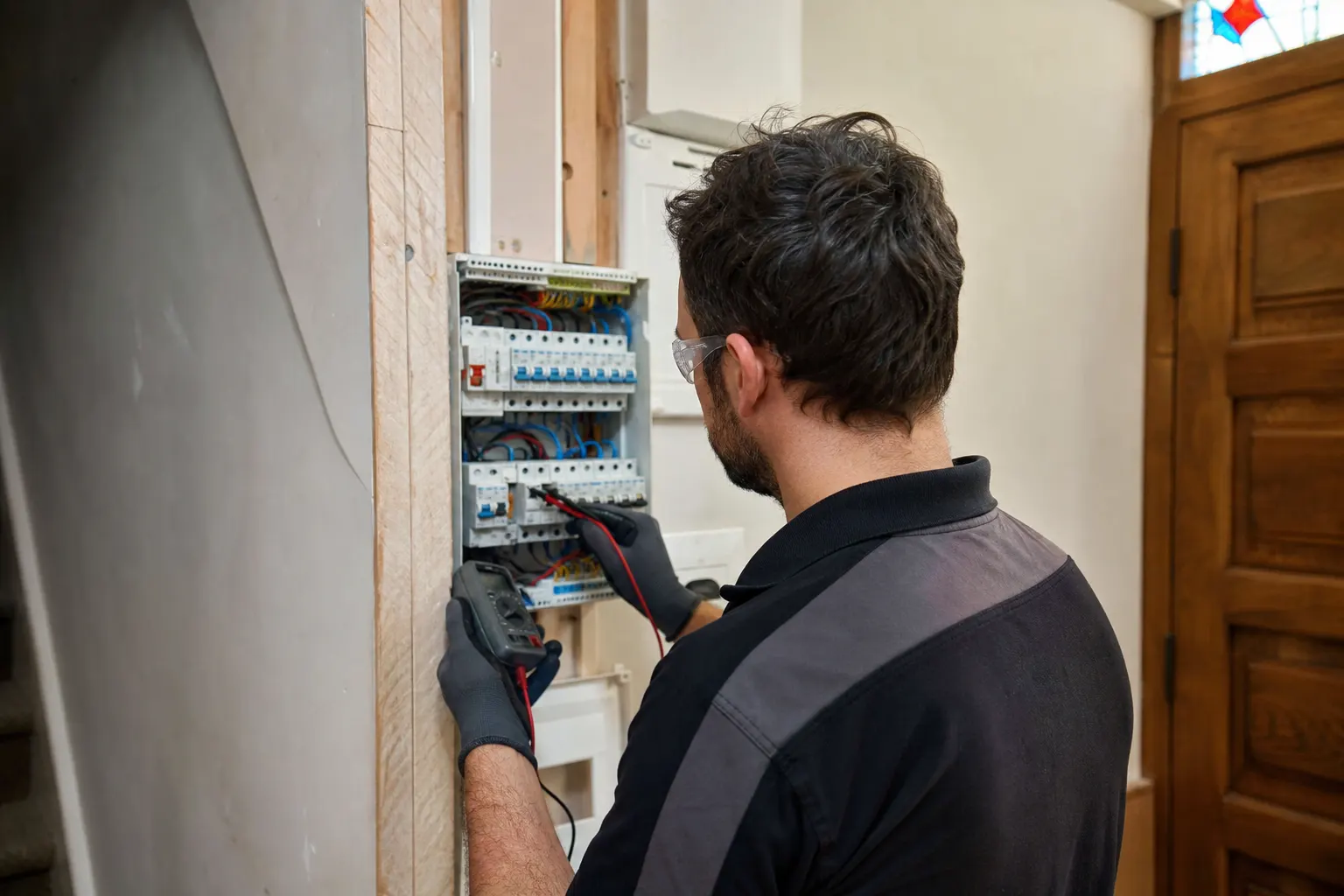
An EICR is an inspection and test of the fixed electrical installation, and it needs more than general electrical skills. Being a qualified electrician is the starting point, but the person signing your report should also be experienced in periodic inspection and testing, and should work to the current wiring regulations (BS 7671).
Ask whether the company is registered with a recognised competent person or certification scheme, and ask to see proof. A genuine electrician will be happy to show ID and registration details, and you can usually verify these with the scheme itself. Also ask who will actually attend and sign the report, as this should be a competent person and not someone who simply passes the paperwork on.
Questions worth asking before you book
A few plain questions tell you a lot. Ask what the inspection covers, how many circuits and consumer units are included, and whether it covers outbuildings, garages or external supply points. Ask what test equipment is used and whether the report will include a schedule of circuits and test results, not just a pass or fail page.
Ask how access works. Power usually has to be switched off for parts of the test, so the company should explain how long you may be without electricity and how they will keep disruption down. Ask what happens if they find faults: will they quote separately for remedial works, and will you be free to get that work done elsewhere? Be cautious of any company that seems to treat the inspection as a way of selling repairs.
How EICR pricing works
There is no single going rate, and any figure quoted without seeing the property should be treated carefully. Companies may price by a fixed fee, by an hourly rate, or by a callout fee plus time. Ask which applies and what it includes.
The main things that move the cost are the size of the property, the number of circuits and consumer units, how easy the wiring is to reach, and how long the inspection takes. Time of day, parking, and whether furniture or stored items block access can also matter. Older or altered installations can take longer to trace. Parts and repairs are normally separate from the inspection itself, so check whether minor fixes are included or charged on top. Whatever you are told, ask for a written quote that lists exactly what is covered, and compare like with like.
What a good report and follow-up look like
The report should describe the electrical installation condition clearly, list any observations, and give each one a classification code. It should end with an overall result of satisfactory or unsatisfactory. If it is unsatisfactory, the company should explain in plain English what needs doing, how urgent it is, and what the remedial works would involve.
You should be able to ask questions about the findings without being pressured. Keep the report safe, as lenders, insurers, letting agents and future tenants or buyers may ask to see it. The report should also recommend when the next inspection is due, which depends on the property and its condition.
Who needs one, and how it differs from an EIC
For rented homes, the landlord is generally the person responsible for arranging an EICR, not the tenant. Rules for landlords, including how often reports are needed and what must be done about faults, can change, so check GOV.UK for the current position. Employers and business premises have their own duties under electricity at work rules, so commercial owners should check what applies to them.
An EIC, or electrical installation certificate, is issued when a new installation or new circuit is completed. An EICR is different: it reports on the condition of an existing installation. An EIC does not replace the need for later periodic inspection, because wiring ages and gets altered over time.
Common questions
Can any qualified electrician do an EICR?
Not necessarily. The electrician should be qualified and also competent in inspection and testing, familiar with the wiring regulations, and ideally registered with a recognised scheme. Ask to see proof.
Can I do my own EICR?
It is not advisable. An EICR needs specialist test equipment, training and experience, and landlords and insurers will expect a report from a competent person. Get a qualified professional to do it.
Do I need an EICR if I have an EIC?
Possibly, yes. An EIC covers new work when it was completed. An EICR checks the condition of the installation later on, so the two do different jobs.
What is the going rate for an EICR?
It varies with the property size, number of circuits, access and how the company charges. Ask for a written quote that sets out what is included, and compare quotes on the same basis.
Useful sources
- NICEIC: The electrical contracting body, with a register to check an electrician.
- Citizens Advice: Free, independent advice on your rights when paying for work.