 Braintree Electrical Services
Guide
How often should an EICR be carried out?
Most homes and rental properties need an EICR at least every five years, with shorter gaps for some premises. Here is how to work out the right interval.
- Send a short enquiry
- Covering Essex
- EICR and related services
An EICR (electrical installation condition report) is usually carried out at least every five years for rented homes and commercial premises. Owner-occupied homes are often advised to have one less often, but the inspector can set a shorter interval if the wiring is older or in poor condition. The date for your next inspection is written on the report itself, so that is the figure to follow.
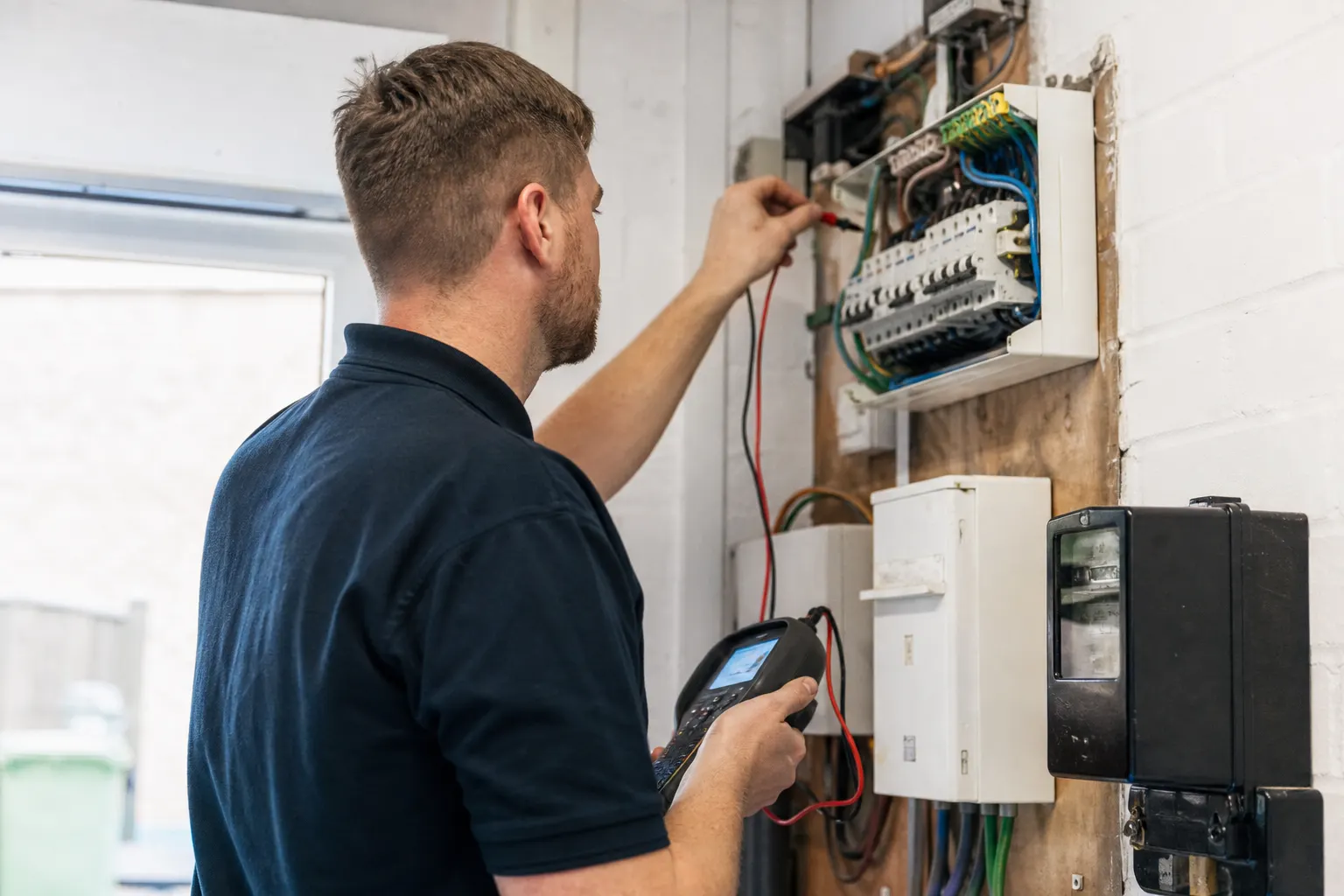
The usual intervals
An EICR records the electrical installation condition of a property: the fixed wiring, the consumer unit, sockets, lighting circuits and earthing. Industry guidance sets out typical gaps between inspections, and the inspector chooses a recommended date based on what they find.
For a home you live in, guidance commonly suggests a longer gap than for rented homes. For rented homes and commercial premises, five years is the usual maximum. Some places are advised to be tested more often, such as premises with heavy use, damp or outdoor conditions, or special installations. That is why you may see three years mentioned for some buildings and five for others. Neither is wrong, because the right figure depends on the type of property and its condition.
Landlords and tenants
Landlords generally must make sure the electrical installation in a rented property is inspected and tested at regular intervals, no more than five years apart, by a competent person. They should keep the condition report and give a copy to their tenants. A new tenant should usually be given the most recent report too.
If the report finds problems, the landlord must usually arrange the remedial work within the timescale stated and confirm in writing that it is done. Rules differ between the nations of the UK and can change, so check GOV.UK for the current position before relying on any summary, including this one.
Commercial premises, the NHS and other organisations
Shops, offices, workshops and other commercial premises are normally inspected at no more than five-year intervals, and the employer or building owner is responsible for electrical safety. Some businesses choose shorter gaps because of insurance requirements, heavy equipment or a busy public setting.
Healthcare buildings, including NHS sites, usually follow their own technical guidance and internal policies, which can require more frequent testing than a typical office. If you manage a building like this, follow the policy of the organisation or the responsible person. Questions about older years, such as what applied in 2021 or 2022, are best checked against the guidance of the day, and GOV.UK is the place to start.
When to book sooner than the date on your report
A five-year or longer cycle is a maximum, not a target. Consider an inspection earlier if:
You are buying or selling a property and do not know the age or condition of the wiring.
The consumer unit is old, has rewirable fuses or has no RCD protection.
You notice flickering lights, warm sockets, burning smells, tripping circuits or scorch marks.
There has been flooding, fire, a leak or other damage.
A previous report was unsatisfactory and work has been done since.
You have taken on a new tenant, or a property has been empty for a long time.
Major alterations such as an extension or new circuits should be certified when the work is done, but an EICR is still a good check on the wider installation.
How long an EICR is valid and what happens next
An EICR is valid until the next inspection date recorded on it, as long as nothing significant changes. The inspector may shorten that date if they see signs of deterioration. If you carry out major work or something goes wrong, the report may no longer reflect the real state of the installation.
The report gives an overall result of satisfactory or unsatisfactory. Observations are coded: C1 means danger present, C2 means potentially dangerous, C3 means improvement recommended, and FI means further investigation is needed. C1, C2 and FI items make a report unsatisfactory and need remedial work. After the work, you should receive written confirmation, and in some cases a further inspection.
Testing involves isolating circuits for short periods, so plan around that. Braintree Electrical Services carries out EICR work and serves Braintree and the wider Essex area. When you ask for a quote, say what type of property it is, roughly how many circuits or rooms there are, and whether it is rented. The price depends on the size of the installation, access, the time the testing takes and any remedial work found, so ask for it in writing.
If you spot unsafe electrical work done by someone else, you can raise it with the person who did it, the landlord or property owner, or your local council, depending on the situation. Details of who to contact are on GOV.UK.
Common questions
Is an EICR 3 years or 5 years?
Five years is the usual maximum for rented homes and commercial premises. Three years, or less, may be recommended for certain premises or where the wiring is in poorer condition. The inspector's recommended date on your report is the one to follow.
How often does an EICR need to be done on a rental property?
Landlords generally need the installation inspected and tested at intervals of no more than five years, and sooner if the report says so. Tenants should be given a copy. Rules can change, so check GOV.UK for the current position.
How long is an EICR valid for in the UK?
It is valid until the next inspection date written on the report, provided the installation has not been significantly altered or damaged. That date is often five years after the inspection, but it can be shorter.
Do landlords have to decorate every 5 years?
There is no general rule linking decorating to the five-year EICR cycle. Decorating obligations depend on the tenancy agreement. The five-year figure in electrical safety refers only to inspection and testing of the installation.
Useful sources
- NICEIC: The electrical contracting body, with a register to check an electrician.
- GOV.UK: electrical safety standards in the private rented sector: The official guidance for landlords, tenants and councils on electrical safety checks.