 Braintree Electrical Services
Guide
How Long an EICR Takes and What Is Involved
An EICR on an average home usually takes a few hours, longer for big or complex properties. Here is what the inspector checks and how to prepare.
- Send a short enquiry
- Covering Essex
- EICR and related services
An EICR (Electrical Installation Condition Report) on an average home usually takes a few hours, and larger or more complicated properties can take most of a day or more. The time depends mainly on how many circuits there are and how easy they are to reach. This guide explains what happens during the visit, how to prepare, and what the report tells you. Braintree Electrical Services provides EICRs for customers in Braintree and across Essex.
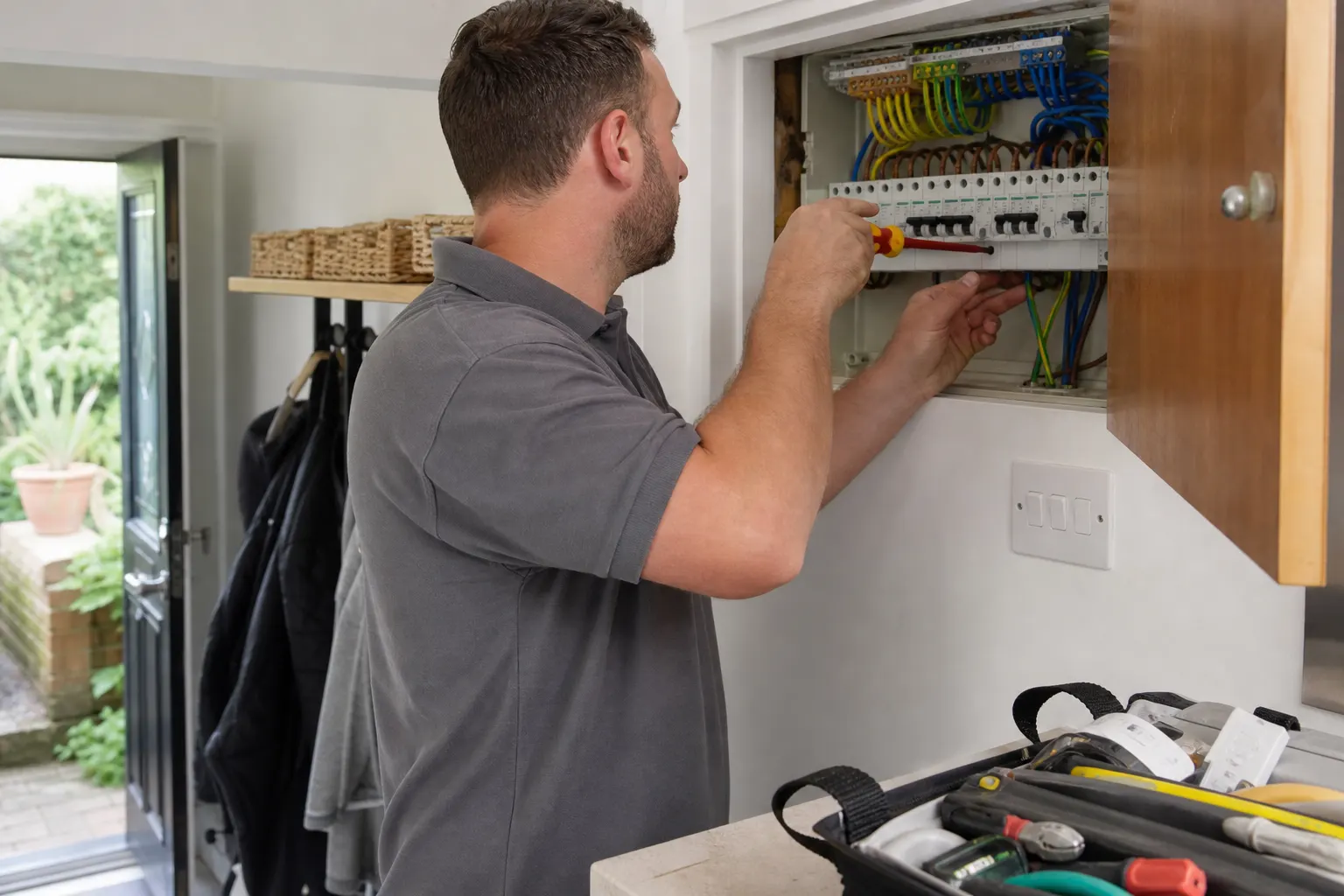
What decides how long an EICR takes
The biggest factor is the number of circuits. A small flat with one consumer unit is quicker than a large house with several boards, outbuildings or an electric vehicle charger. A typical three-bedroom house sits somewhere in the middle, but treat that as a rough guide, not a promise.
Access matters too. If the consumer unit is behind stored boxes, or sockets are hidden behind heavy furniture, the inspection slows down. The age and condition of the wiring also play a part, because older installations often need more investigation to trace which circuit feeds what.
Commercial premises, shared landlord properties and buildings with data or specialist equipment take longer again, and may need the power off in stages to keep the business running.
What happens during the inspection
An EICR has two parts: a visual inspection and testing. The inspector looks at the consumer unit, wiring where it can be seen, sockets, switches, light fittings, earthing and bonding. They check for damage, overheating, signs of unsafe DIY work and whether the installation suits the way it is used now.
Then comes testing. Each circuit is tested with specialist equipment to measure things like continuity, insulation resistance and how quickly protective devices would react to a fault. To do this safely, the power is switched off to circuits in turn. Expect the electricity to go off for periods during the visit, so save your work and plan around it.
An EICR is not a PAT test. PAT testing covers portable appliances, while an EICR covers the fixed wiring and the installation itself.
How to prepare so it goes smoothly
Clear the area around the consumer unit and any other distribution boards. Make sure the inspector can get into every room, including lofts, garages and sheds if they have power.
Tell everyone in the property about the power cuts. Shut down computers, and think about anything that needs constant power, such as medical equipment, alarms, freezers or home-working setups.
If you have previous electrical certificates or an earlier report, keep them handy. They can help the inspector understand the installation and save time. Landlords should also let tenants know in advance and arrange access.
What the report tells you
After the inspection you receive a written report. It gives an overall result of satisfactory or unsatisfactory, and lists any observations with a code. C1 means danger is present and urgent action is needed. C2 means potentially dangerous. C3 means improvement is recommended. FI means further investigation is required.
Any C1, C2 or FI usually means an unsatisfactory result. A C3 on its own does not normally cause a fail. The report also states a recommended date for the next inspection, which depends on the type of property and its condition.
If the result is unsatisfactory, and how pricing works
An unsatisfactory report is not the end of the road. The faults need putting right, and once the remedial work is done the installation can be reassessed and the report updated or a certificate issued for the repairs. Landlords have legal duties around electrical safety in rented homes, and the rules can change, so check GOV.UK for the current position.
For cost, ask for a written quote and check what it covers. Pricing generally reflects the size of the installation, the number of circuits, how long the inspection will take, access, and whether the work is outside normal working hours. Repairs found during the inspection are usually quoted separately because they depend on what is wrong and which parts are needed.
Common questions
What does EICR stand for?
EICR stands for Electrical Installation Condition Report. It is a formal record of the condition of the fixed electrical wiring in a property, based on inspection and testing.
How long does an EICR last?
The report states a recommended date for the next inspection. For rented homes this is commonly around every five years, and for owner-occupied homes it is often longer, but the inspector's recommendation on your report applies. Rules for landlords can change, so check GOV.UK.
What happens if you fail an EICR?
An unsatisfactory result means there are faults coded C1, C2 or FI that need attention. The remedial work should be carried out, then the installation is reassessed and the paperwork updated to show the issues were resolved.
How long does it take to get an EICR certificate for a 3-bedroom house?
The inspection of a typical three-bedroom house often takes a few hours, with the written report following afterwards. Exact timings depend on the number of circuits, access and the condition of the wiring.
Useful sources
- NICEIC: The electrical contracting body, with a register to check an electrician.
- GOV.UK: electrical safety standards in the private rented sector: The official guidance for landlords, tenants and councils on electrical safety checks.