 Braintree Electrical Services
Guide
Common mistakes with an EICR and how to avoid them
The usual EICR mistakes are poor preparation, picking on price alone and ignoring the report codes. Here is how to avoid each one.
- Send a short enquiry
- Covering Essex
- EICR and related services
The most common EICR mistakes are treating it as a quick visual look, not making sure every circuit can be reached, and ignoring the codes in the report once it arrives. You avoid them by choosing a competent electrician, preparing the property properly and acting on anything the report flags.
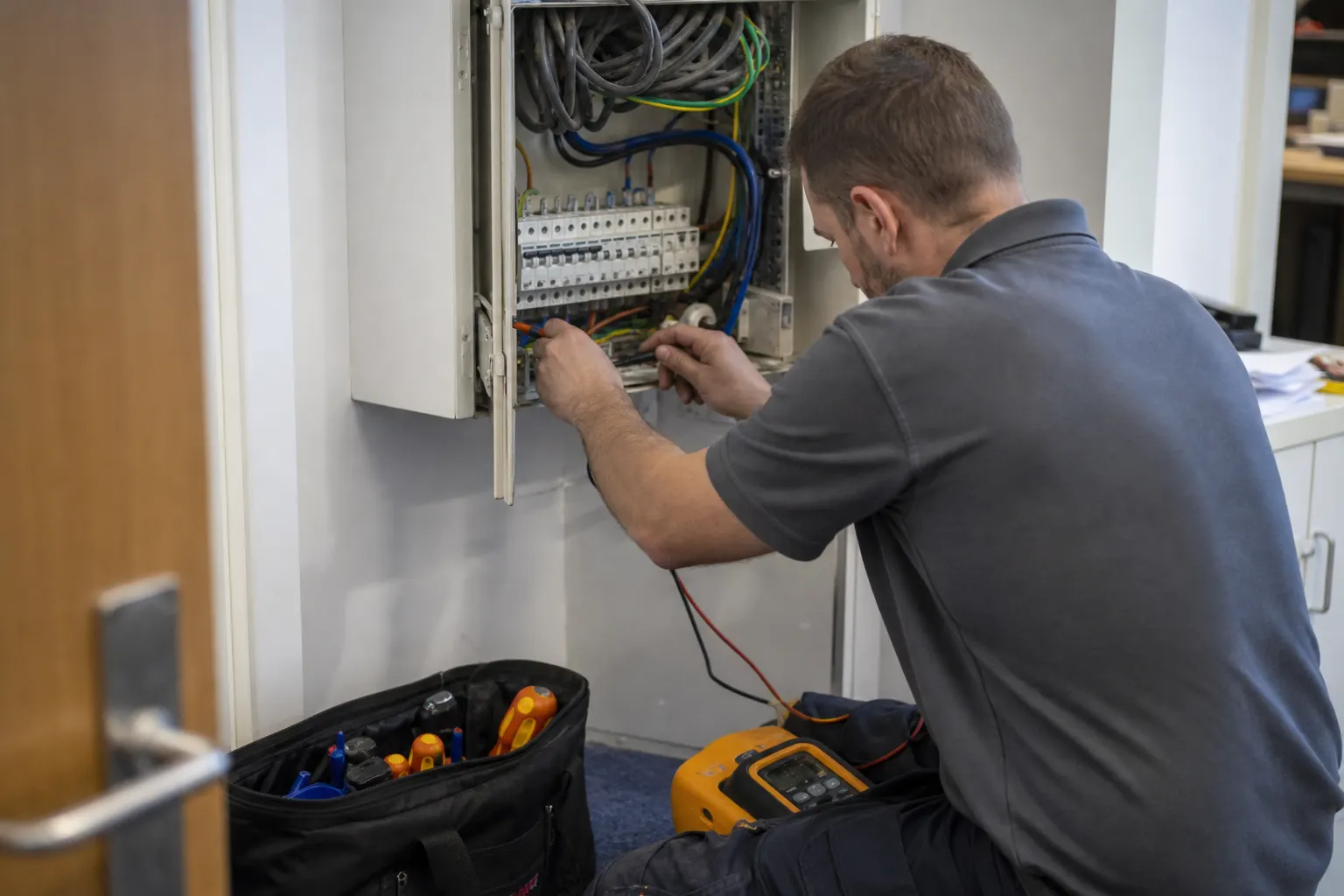
Mistake one: thinking an EICR is a quick look
An Electrical Installation Condition Report is an inspection and testing exercise on the fixed wiring in a property. That means the consumer unit, circuits, sockets, switches, lighting, earthing and bonding. It is not the same as a plug-in appliance test, and it is not just a glance at the fuse board.
If someone offers a report without opening the consumer unit or testing the circuits, be cautious. A proper EICR involves testing as well as looking, and the report should list what was inspected and any limits on the inspection.
Mistake two: not checking who is doing the work
Anyone can print a form with the words EICR on it, but the report is only as good as the person who completes it. As a reader, you should ask who is carrying out the inspection, whether they are registered with a recognised electrical competent person scheme, and whether they can show ID and proof of that registration.
Also ask what the report will cover and whether it will include observation codes and a clear overall outcome. Braintree Electrical Services serves Braintree and the wider Essex area, and whoever you choose, these are fair questions to put to them.
Mistake three: poor preparation and access
Many inspections run into trouble because parts of the installation cannot be reached. Locked rooms, a cluttered cupboard under the stairs, a consumer unit hidden behind stored items or an inaccessible outbuilding can all mean circuits go untested. Anything not inspected is noted as a limitation, which weakens the report.
Before the visit:
Clear the area around the consumer unit and any other distribution boards.
Make sure keys are available for garages, sheds, meter cupboards and any rooms with sockets or lights.
Tell everyone in the property that the power will be switched off for periods, and shut down computers, alarms and anything that dislikes losing power.
If you are a landlord, arrange access with tenants in good time.
It also helps to mention any extensions, rewires, new circuits or earlier reports, so the inspector is not working blind.
Mistake four: misreading or ignoring the results
An EICR is not a simple pass or fail like a car test, although the overall outcome is either satisfactory or unsatisfactory. Inside the report, observations are given codes. C1 means danger is present and immediate action is needed. C2 means potentially dangerous. C3 means improvement is recommended. FI means further investigation is required.
The common error is to see that the house is still running fine and file the report away. An unsatisfactory result usually means C1, C2 or FI items need dealing with. Ask the electrician to explain each code in plain English, which items are urgent and what would need to happen for the installation to be brought up to a satisfactory standard.
C3 items are not failures, but they are worth planning for, especially if you are renovating.
Mistake five: choosing on price alone and not planning ahead
The cheapest quote can leave out things that matter, such as a full circuit inspection, a written report or a sensible allowance for the size of the property. Price usually depends on the number of circuits and the size of the property, how easy it is to get at the wiring, the age and condition of the installation, and how long the testing takes. Remedial work is normally separate from the inspection itself, so ask whether it is quoted separately.
Ask for a written quote that states what is included, what is not, and how any extra work would be priced. Do not leave it until a sale, a tenancy start or an insurance question forces the issue. Landlords and homeowners should also check GOV.UK for the current rules on electrical reports, because requirements can change and depend on the type of property.
Common questions
Does an unsatisfactory EICR mean my house is unsafe?
Not necessarily, but it means something in the report needs attention. Usually that is a C1, C2 or FI observation. Ask the electrician which items are urgent and what needs doing to reach a satisfactory result.
Do I need to be at home during the inspection?
Someone should be able to give access to the whole property and agree to the power being switched off. If you cannot be there, arrange for a trusted person to be present and make sure the consumer unit and all rooms are accessible.
Can I do anything to speed up an EICR?
Yes. Clear access to the consumer unit, unlock all rooms and outbuildings, and share any previous reports or details of recent electrical work. Good preparation helps the inspection go more smoothly.
How do I know what an EICR will cost?
Cost depends on the size of the property, the number of circuits, access and the condition of the wiring. Ask for a written quote that sets out what the inspection includes and how any remedial work would be priced.
Useful sources
- NICEIC: The electrical contracting body, with a register to check an electrician.
- GOV.UK: electrical safety standards in the private rented sector: The official guidance for landlords, tenants and councils on electrical safety checks.